
The iPhone Air is so nearly a perfect phone. If only Apple…if only…
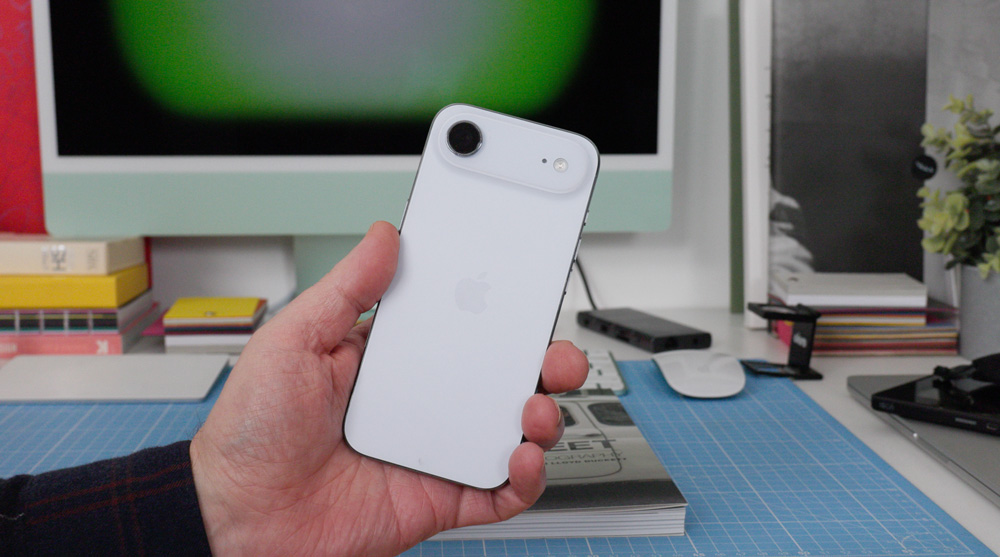
The iPhone Air is a bit of an enigma. When you use it and hold it, there is no doubting that it’s a thing of beauty.
It’s stunning from every angle and almost defeats the rules of design and physics in just how damned thin it is.
It’s been my second phone for around 6 months now, and in that time, some questions and thoughts have cropped up that I thought I’d like to chat over with you.
Is the iPhone Air just style over substance, or are there too many compromises to buying one? And if it survives and isn’t killed off after only a single iteration, what could Apple bring to the iPhone Air to make it more tempting to a wider audience?
Let’s take a look at the iPhone Air, then.
iPhone Air and where it all started
The Air was launched at Apple’s iPhone event in September 2024 alongside the iPhone 17, 17 Pro and 17 Pro Max.
Although we were pre-warned, I think we were still shocked by the starting price of £1000, with it topping out at £1400 for the 1TB model. Apple chose to go with four pretty subtle colours on the Air. I chose the Cloud White, which has proven to be a good choice. It’s kind of classy and understated, and to my mind, suits the style of the iPhone Airwell.
Apple made a blatantly clear choice with this phone to go the premium route.
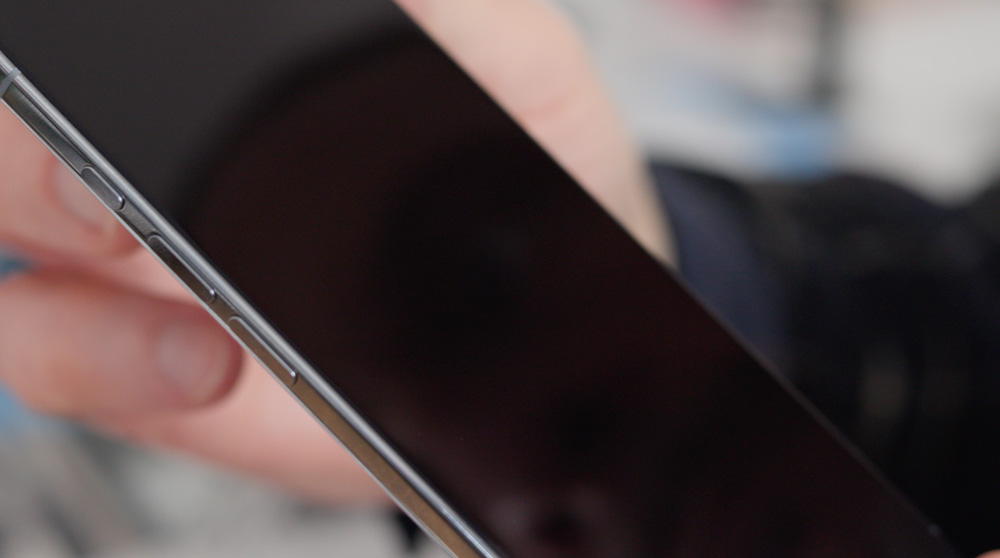
Those grade 5 titanium edges, apart from making this super-thin phone tougher, also add to the feeling of quality. The brushed bevel edges are gorgeous, and even now, I find my fingers toying and playing with it.
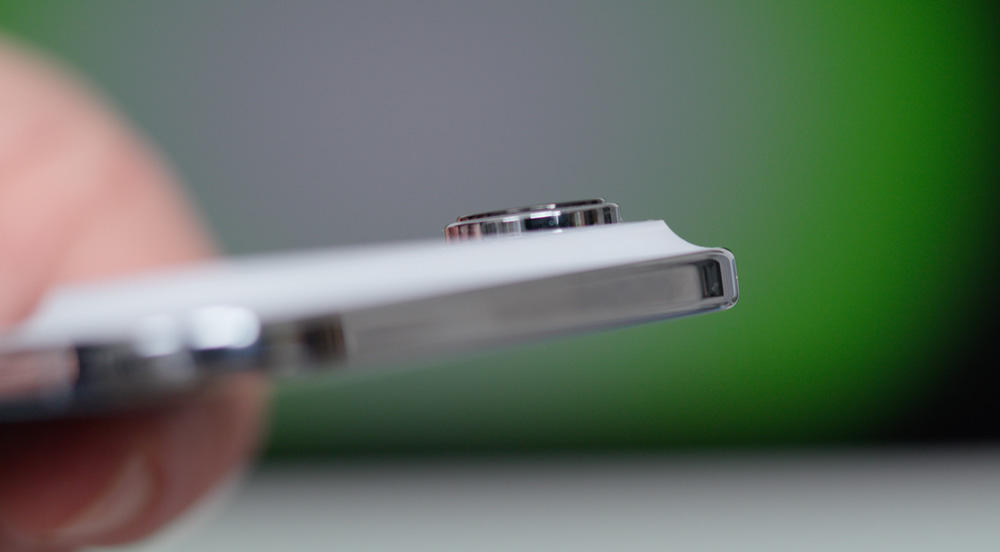
One thing that can’t be denied is that the iPhone Air is a stunning design – it’s a piece of art.
I’m hoping by now that even if you haven’t taken the plunge and bought one, you’ll at least have picked one up in a store to get a feel of what it’s all about. I can sit here and tell you it’s only just a tad over 5mm thin until I’m blue in the face, but this is one of those instances where the numbers don’t tell the full story.
The Air was also a first for me. I’d never set up an eSIM before. I’ve heard it may depend on your carrier, but for me, it was a breeze. How easy it will be to switch the number over to a new phone is another question – but that can wait for now. The Air is, for some reason, a dual eSIM phone, which I guess means you could run two lines on it simultaneously.
A nearly perfect design
As you’ll have gathered, I’m a bit of a fan of the iPhone Air and what it represents, but there is one design area that I think could be tidied up.
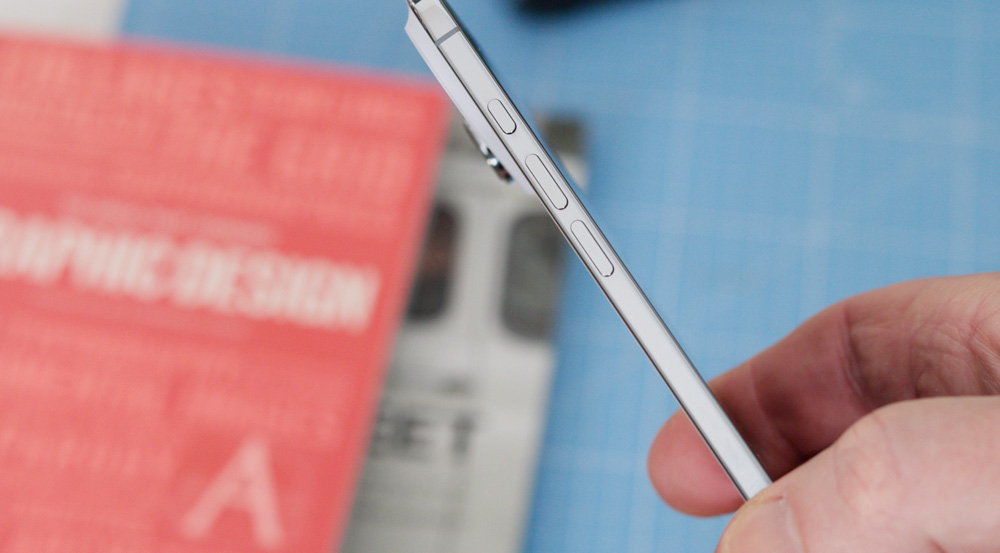
There are too many buttons. I know that’s the Apple way, but we have the Camera Control Button, the Action Button, the Side Button, and the volume buttons, which all seem a bit too busy for such a sleek phone. Not for the last time in this story, I am going to mention Samsung – their Edge has fewer buttons and looks better for it.
The 120Hz 6.5-inch display is bright, punchy and bright. There’s little else new to say about the display itself except for one thing…the Ceramic Shield on this year’s phones has come a long way.
In general, I don’t use cases on any of my phones, but to buy an iPhone Air and put it in a case would just be sacrilege! My Air has never been in a case or had a screen protector on it, and after a year of daily use, a few road trips and a trip to Las Vegas, it’s still as it was the day I took it out of the box.
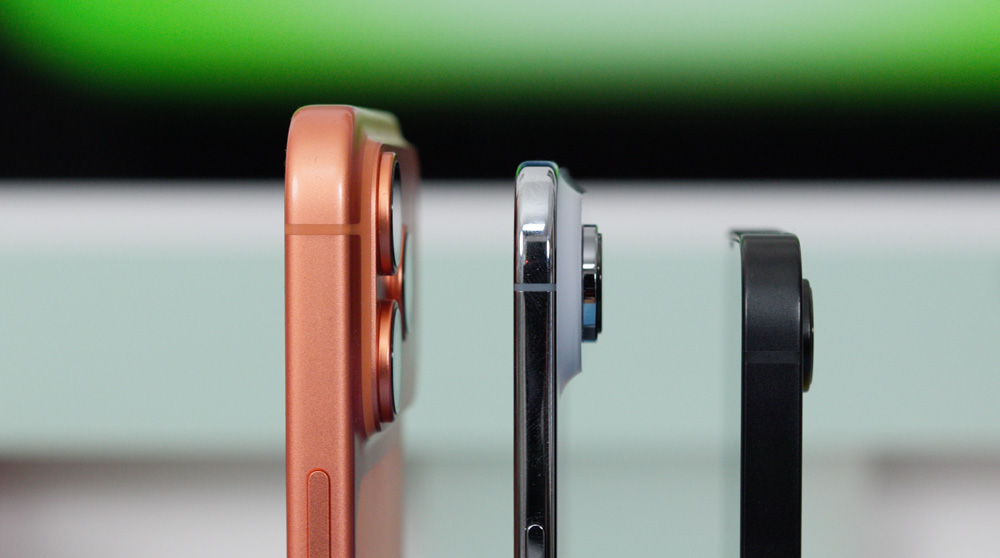
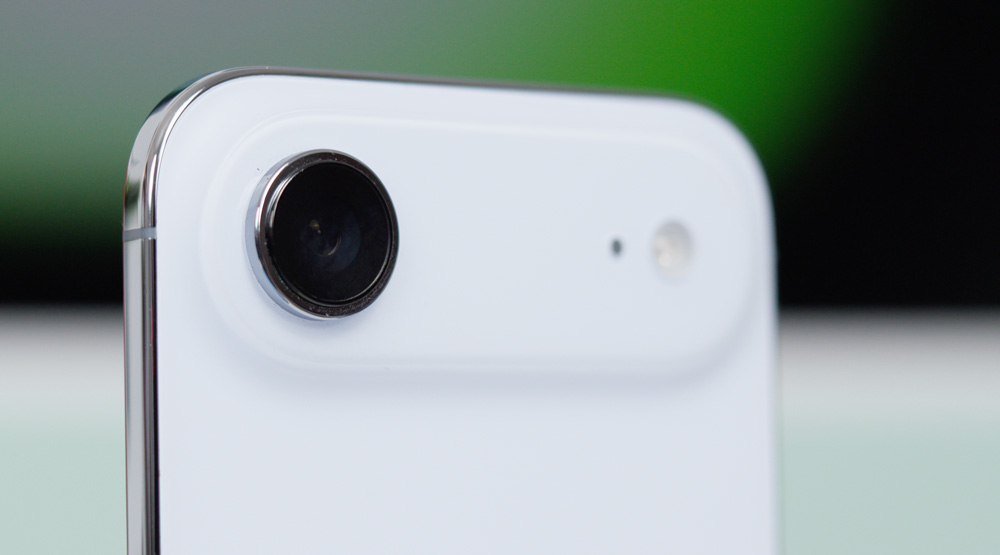
Obviously, the big design change for the iPhone Air was the camera plateau. Apart from being functional, as Apple has placed all the working bits of the phone in it, it works from a usability point of view, too.
With a camera bump that is now the full width of the phone, there is zero desk-wobble.
On the inside
The inside of the iPhone Air has seen some pretty huge improvements as well.
We’re rapidly getting to the point where everything inside Apple’s phones is now made by them. It’s a point they clearly wanted to get to, and with the iPhone Air, it’s become a reality.
We now have the A19 Pro Apple silicon chip powering it, the N1 connectivity chip for improved WiFi and Bluetooth reach, and the latest of their modems, the C1X, which is an iteration of the modem first seen in the iPhone 16e.
IOS 26 saw some great improvements in power efficiency, and when you combine that with all-Apple hardware, it’s a recipe for success. Which nearly leads me to the battery life.
Apple kind of shot themselves in the foot with this. We’d heard all sorts of rumours before the phone was launched, about how the smallish battery was going to be woeful.
And in a move that only went to cement that line of thought, Apple released a battery pack at the event. It was setting the iPhone Air for a fall from the get-go if you ask me.
We all feared the worst, but what Apple had seemingly not accounted for was that the combination of optimised hardware and software now working in perfect harmony meant the battery on the iPhone Air has been great.
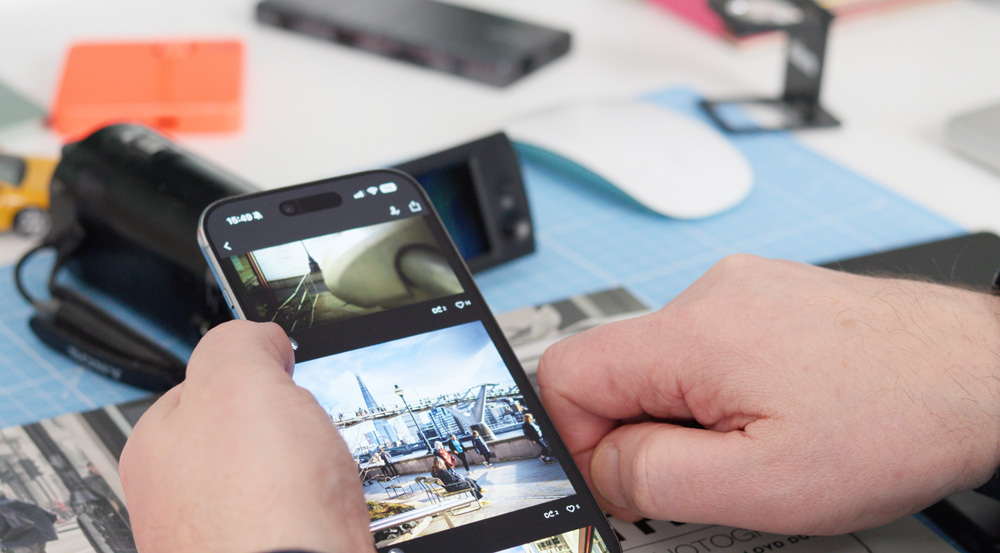
No, honestly – it’ll last me a full day of average use. It’s not unusual for me to finish the day with at least 20% or 30% battery left. I think Apple are finally starting to see the kind of performance they had long envisioned.
Also, when it is time to charge, the Air is a quick charger too.
The battery is just fine!
Let’s talk about the camera
I’m going to chat about those three things I want to see changed on the next iPhone Air in a bit, but let me just throw in my thoughts on the camera.
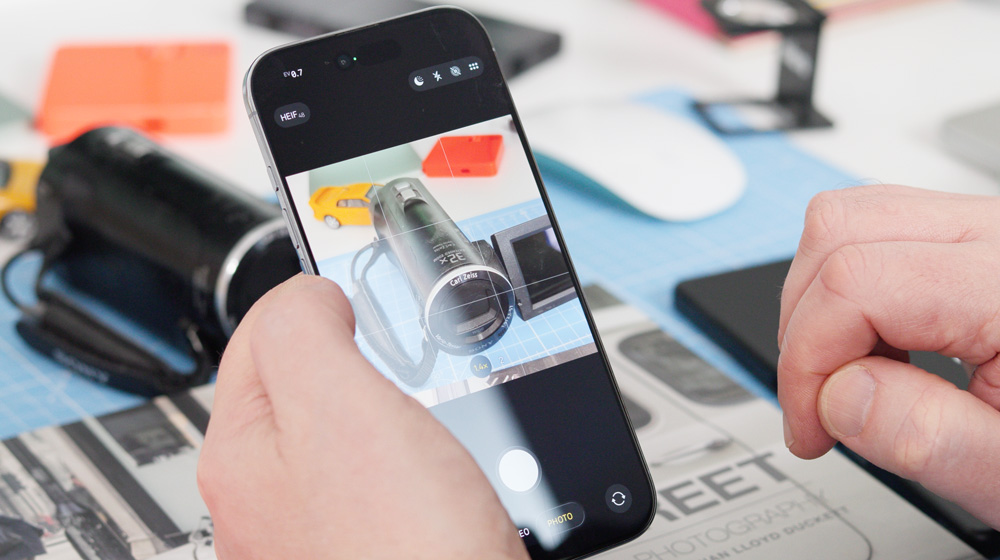
Yes, we only have a single camera, but it’s a very decent 48MP f1.6 lens that will let in a good amount of light and will take good videos and pictures. I think we’ve been lulled into this thought that we all want to be taking some kind of award-winning pictures every time we reach for our phones.
In reality, though, we aren’t.
What we are trying to do is capture the moment and create memories. The iPhone Air does that plenty well enough. Assuming you generally like the look of how Apple processes their images, then you’ll be happy enough with the pictures from the camera on here.
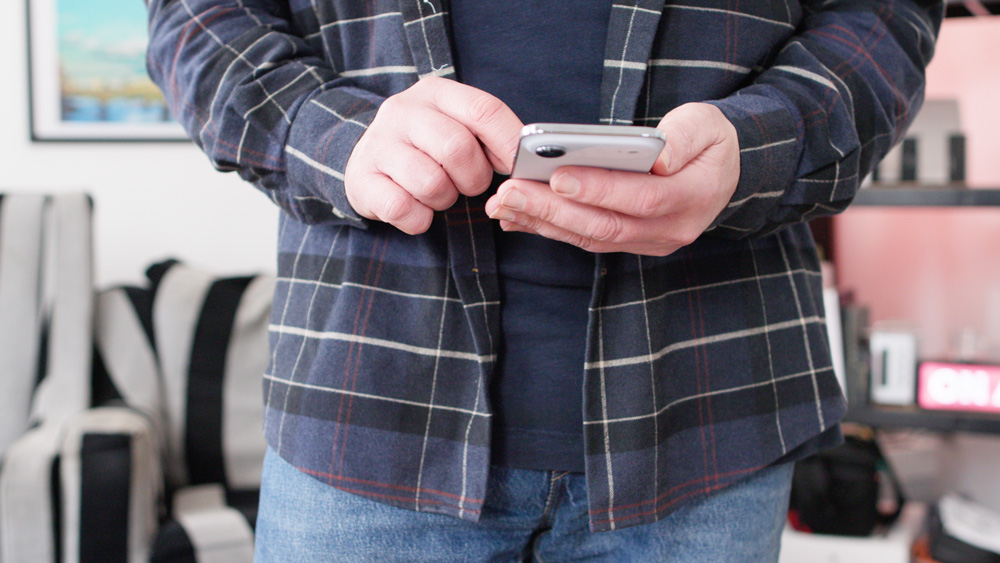
You can shoot in either 24MP or 48MP, and you get a 2x tele as well. And if you want to risk ruining your pictures, well, then you could even venture to use the 10x digital zoom as well!
The camera that we have is not an issue – it’s just that we should have one more.
There were two features on this phone that, when they were announced, were supposed to be the next big things, but in honesty, I’ve never used them since my early review videos.
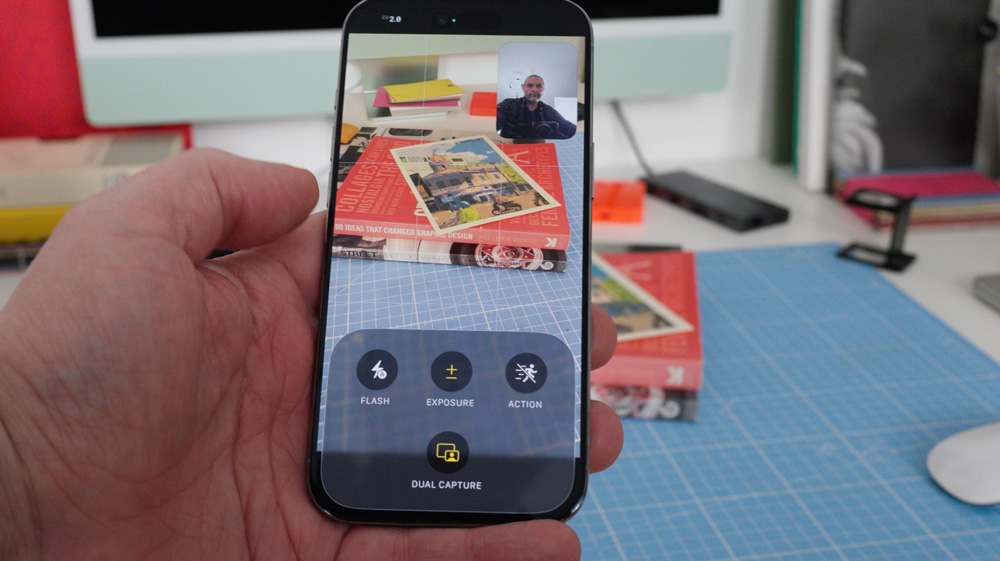
I’m not a group selfie kind of guy, so the Open Gate feature, whereby the camera will switch orientation to suit the scene, is of no interest to me and similarly, the Dual Capture feature is something that’s been relegated to the unused features pile.
I’d even forgotten about them until I was settling down to write this piece.
Those three mistakes
Apple do make some very odd choices with both prices and what they decide to leave out of some of their products, and that is certainly true of the iPhone Air.
For a phone costing £1000 to have only a single camera is a crime. Why would they make that choice, full well knowing the flak that they would take for it? With the iPhone Air 2, I’m not only keeping my fingers crossed that we get a second camera, but that it’s an ultra-wide camera that we end up getting. These days, I’m a huge fan of wide-angle photography.
The next mistake on my list is the mono, single speaker. On Samsung’s Edge, you get two cameras and two speakers. Sure, the speaker on the iPhone Air is decent quality and loud enough, and I generally always use AirPods anyway, but even so, a single speaker on a £1000 phone in 2026 is simply not right.
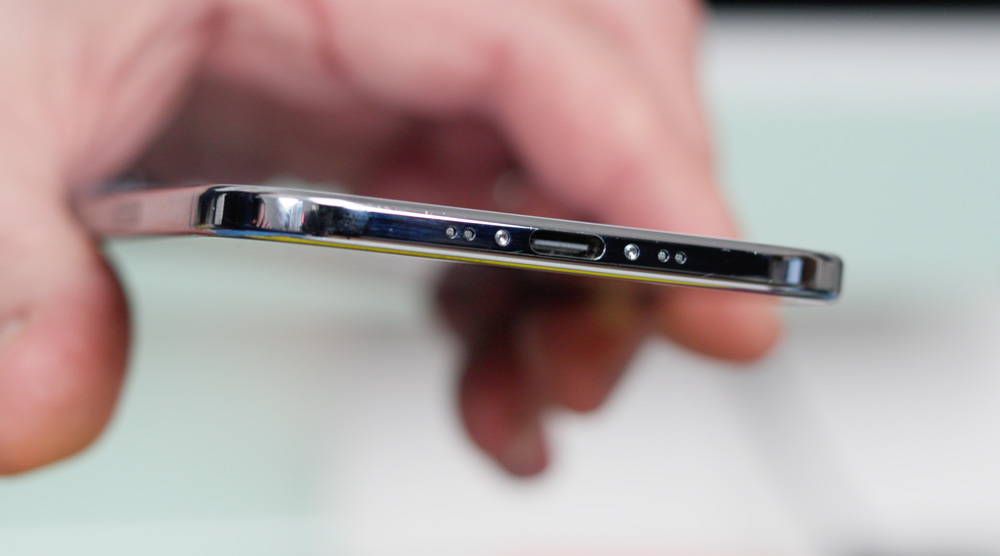
Lastly, on a premium phone like this, I think that Apple should have given us the quicker USB-C port from the Pros. On those occasions when you want to move bigger files about you really feel the effects of that slow 480Mb/s port.
The future
Thin phones simply haven’t caught the imagination at all. Folks ain’t buying ‘em!
The iPhone Air has only made up for about 6% of sales so far, and Samsung has temporarily suspended production of its Edge altogether.
The poor sales have resulted in a delay for when we can expect to see the release of the iPhone Air 2. We first expected it to come along this September, but the smart money is now that we won’t see it until the spring of 2027, when it will be released along with the iPhone 18 and 18e.
But the wait may be worth it. The rumours are that the next iteration will be even thinner, have a larger battery, a vapour chamber, a 2nm chip and a second camera.
But what about that price?
Apple positioned the iPhone Air in a very odd place. For only £100 more, you could buy an iPhone 17 Pro or for £100 less, you could choose an iPhone 17. One thing is for certain, though, particularly if we get these spec improvements, the price won’t be any lower!
One way or another, the poor old Air was on the back foot from day one, wasn’t it?
The other line of thought, of course, was that this phone was ever only meant to be a test-bed, or one half of the iPhone fold which we think is coming our way later this year.
I truly hope that it’s not a case of it being a one-and-done. It’s way too good for that. Sometimes the illogical choices are the cool ones. Does the iPhone Air need to exist? Probably not, but I’m bloody glad it does.
It harks back to what Apple was once all about – cool, contemporary, cutting-edge design. Six months on, it still feels like a slice of fiction, and every phone you pick up after the iPhone Air just feels like a fossil.
Let’s pray that the second time around, Apple sorts out some of these mistakes and that the iPhone Air will finally get its moment in the sun!

3 responses
Totally agree about the titanium edges, they feel amazing! Hoping for more substance next time.
The design and feel are absolutely top-notch, but having just a single camera, a mono speaker, and slow USB‑C really is hard to justify. Hopefully the second generation will fix these shortcomings.
Yup, I agree. Why, on such a premium and expensive phone, they held back in those areas, I have no idea!