
If you are an iPad mini fan, brace yourselves!
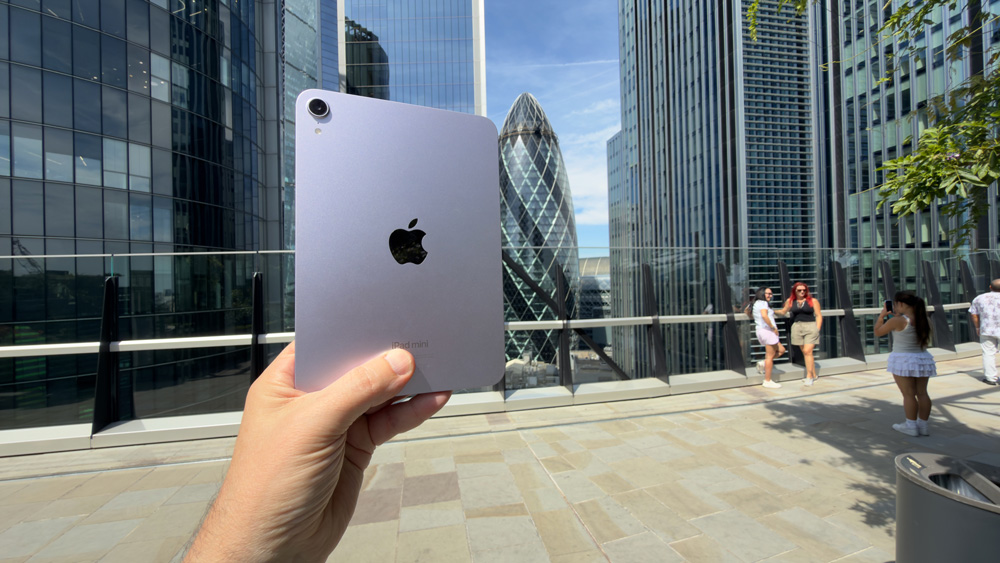
The iPad mini has a lot of fans – and I can see why!
The good news is, from what we’re hearing, the iPad mini is about to get quite the facelift later this year.
The mini, although small, packs a pretty serious punch these days. With the recent advances in iPadOS, it is now more practical than before, with nearly every inch of that 8.3-inch screen being usable.
Because of those improvements, the amount of work you can get done with it is now better than ever, too.
Of course, we already know it’s great for content consumption. The iPad mini has always shone as a casual leisure device, but now it can also double up as a pretty serious work tool as well. The new OS lets us multitask with multiple windows open at once and shift or resize them, pretty much to our hearts’ content.
The iPad mini’s sales are pretty reasonable, too. Although Apple groups all iPad sales together, consumer research companies estimate that the mini accounts for around 10%-12% of iPad sales. Given its price point and versatility, I’m surprised it’s not a higher percentage than that, actually.
The mini is perfectly positioned in the lineup, and part of its appeal is that it’s not trying to be something it’s not. It’s an honest iPad.
While the iPad Air and iPad Pro are reserved for the more demanding users, and the A16 iPad is there for very basic requirements, the iPad mini manages to straddle the line and almost have a foot in each camp.
Although the A16 iPad is the cheapest, starting from £429, it’s not equipped for Apple Intelligence, as it only boasts 6GB of RAM. For most people, that would make it a non-starter.
The iPad Air comes with the M4 chip but costs £150 more than the mini as, it now starts at £749. And yes, I know that the mini only has an A series chip, but before discounting the A17 Pro chip as only being a phone chip, let’s remember that a phone chip is good enough to power the amazing MacBook Neo. So, if a phone chip is good enough for the Neo, then it’s sure as hell good enough for the iPad mini!

It’s clearly not escaped Apple’s attention that, after all these years, the iPad mini remains so popular. If the current round of rumours is to be believed, then the iPad mini is about to become an even more attractive proposition to a wider audience.
And those improvements start with the display.
iPad mini gets OLED
A fairly respected Korean news channel has reported that Samsung has begun mass production of OLED displays for a couple of Apple devices.
Apple is keen to roll out OLED across as many of its premium devices as possible. OLED was first used on the Apple Watch and iPhones. Then the iPad Pro got an OLED display a few years back.
Now, production of OLED panels for the MacBook Pro is well underway, and the next up should be an OLED display for the iPad mini.
The clamour for OLED is obvious.
OLED offers much better power efficiency with richer blacks, better contrast and deeper colours. In the case of the mini, it will lift an already good display to another level.
The fact that the current iPad mini 7 was released twenty months ago lends more weight to the rumours that a new mini may be on its way. An OLED display alone may well be enough to convince quite a few people to trade up.
Apple knows we’re suckers for an OLED display!
Given the current and ongoing memory shortage, it’s inevitable that when the new iPad mini does finally see the light of day, it’s almost certain that it’ll cost more. Adding an OLED display would be a great way to soften the blow of the price increase.
I’m sure more people would be happy to at least think that the extra money they’re being asked to part with is due to the very visible, gorgeous display rather than the increased cost of the very invisible RAM inside.
Along with the display being OLED, it’s expected that it’ll also be a ProMotion 120Hz high-refresh-rate panel too. It stands to reason that if the base iPhone 17 now has a 120Hz panel, then so too would the next-generation iPad mini.
To highlight this new fast OLED panel, there’s a very good chance that it’ll also be larger, jumping from 8.3 to 8.7 inches, which will help it to create its own unique space, as we’ll chat about later.
But seemingly, the improvements are likely to be more than just to the display.
More power
Not that I’ve ever felt my iPad mini was sluggish or slow, but the next mini will get the A19 Pro chip that we first saw used in the iPhone Air and 17 Pro.
The iPad mini 8 is likely to use a mid-tier, binned version of the chip similar to the one first used in the iPhone Air, but it’ll have one less GPU core. The chip upgrade is important, as by the time the next mini comes along, we’ll have iPadOS 27, which will bring with it far more demands on the processor because of the deeper integration of Apple Intelligence & the new system-wide style Siri.
The iPad mini is probably the most portable device after the iPhone, meaning it will be used in more varied locations than other iPads.
It’s the sort of size that could quite likely see it being used in kitchens, bathrooms, and, I guess, even poolside this summer while on holiday.
Because of that, Apple is keen to improve its water resistance by updating the design of the iPad mini 8. Obviously, to make this a reality would mean that Apple needs to physically make the shell of the iPad mini more water-tight.
The way Apple is going about this is to do away with the speaker grill altogether and instead use a vibration-based speaker design. It took me a moment to get my head around how this kind of speaker works, but I think it relies on sound-emitting surfaces.
I know this isn’t breaking news, as Sony has used it on their TVs in the past and LG on its G8 ThinQ phone as far back as 2019…but it is a first for Apple.
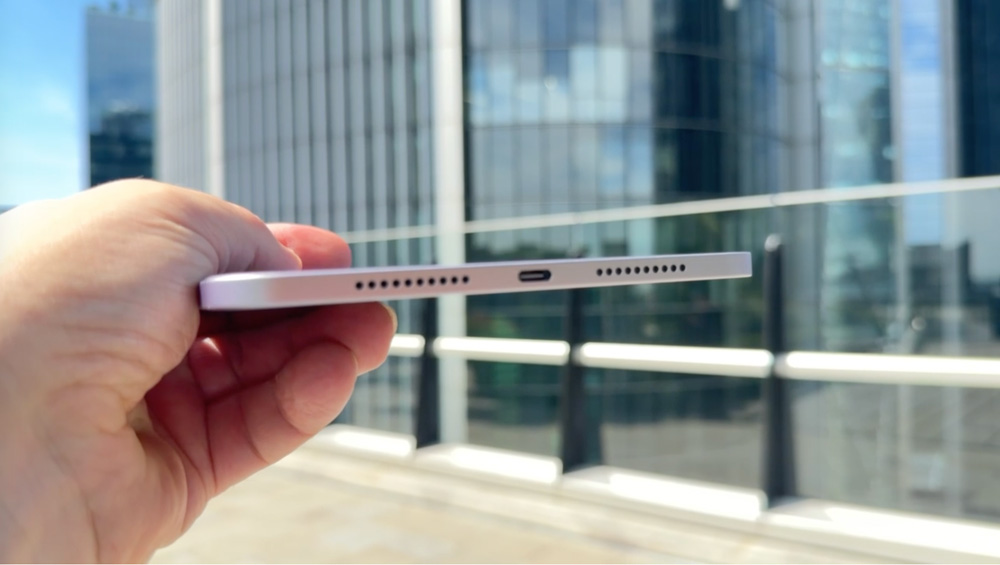
If Apple is successful in bringing this to the next mini, then it could mean it’s the first iPad to get an official IP rating and would also pave the way to make other iPads water-resistant as well.
As with the OLED display, it could be another compelling reason to convince current iPad owners to trade up sooner than they had planned.
iPad mini – is it safe?
It seems more than likely that Apple is about to dip its toes into the foldable arena this September with the release of the iPhone Ultra.
I mention this because the open flat size of the Ultra will be very similar to the mini. The leaks and dummy units we’ve seen seem to suggest that the Ultra will have a display that measures 7.8 inches with a 4:3 aspect ratio and will be 4.5mm thick.
Those specs caused some speculation as to whether the future of the iPad mini would be safe, as on the face of it, the Ultra would appear to be treading on its toes.
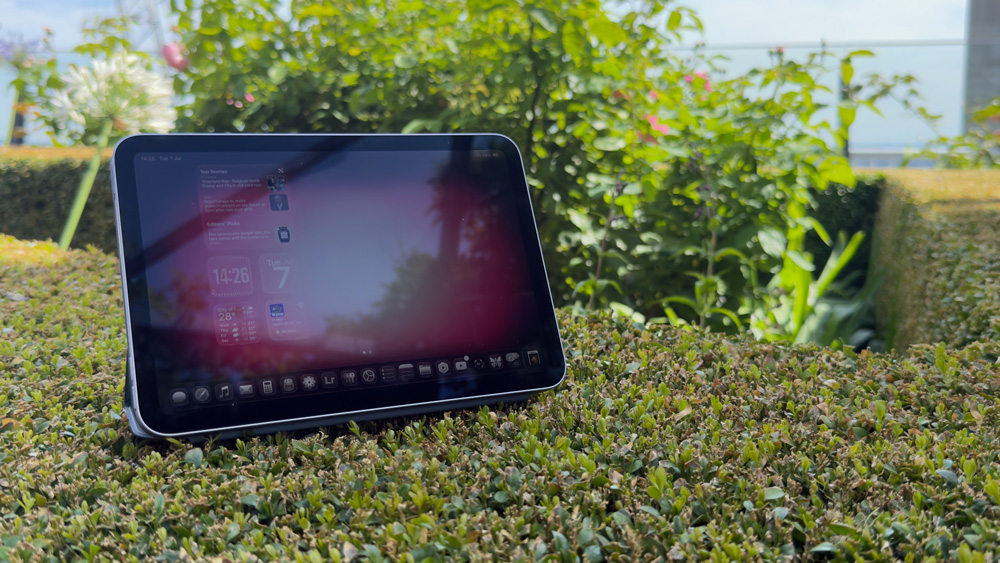
The mini currently has an 8.3-inch screen with an aspect ratio of 3:2 and is 6.3mm thick. Although that puts the physical size and shape of the mini and the Ultra very much in the same space, in reality, they’re worlds apart.
It’s reasonable to think that the next iPad mini may be between, say, £100 and £200 more expensive because of that pesky RAM problem we have. So let’s say that the entry-level mini starts at £899; that will still be a lot cheaper than the Ultra.
At the moment, we’re expecting the foldable iPhone to cost anywhere between £2000 and £2500, and once you start upgrading the storage, well, your guess is as good as mine as to what the costs may climb to.
Also, it’s worth bearing in mind that the Ultra will be new technology, meaning it may come with teething problems. Because of that and the price, the Ultra is likely to be more for nerds, enthusiasts and tech fans.
First gen is rarely the finest example of any device!
And although I’m sure Apple will have tested the fold element of the phone to within an inch of its life, you’d be a braver man than me to suggest that it might not have some issues.
And what about the battery? Will whatever battery Apple squeezes inside be up to dealing with two OLED panels?
You see, there are a lot of unknowns about the Ultra.
The iPad mini, on the other hand, is tried and tested. While it may not have all the glitz of the long-awaited new folding iPhone, at least you know you can rely on it.
So I bet that Apple will lean into the mini, give it some bells and whistles and let it carry on doing its thing.
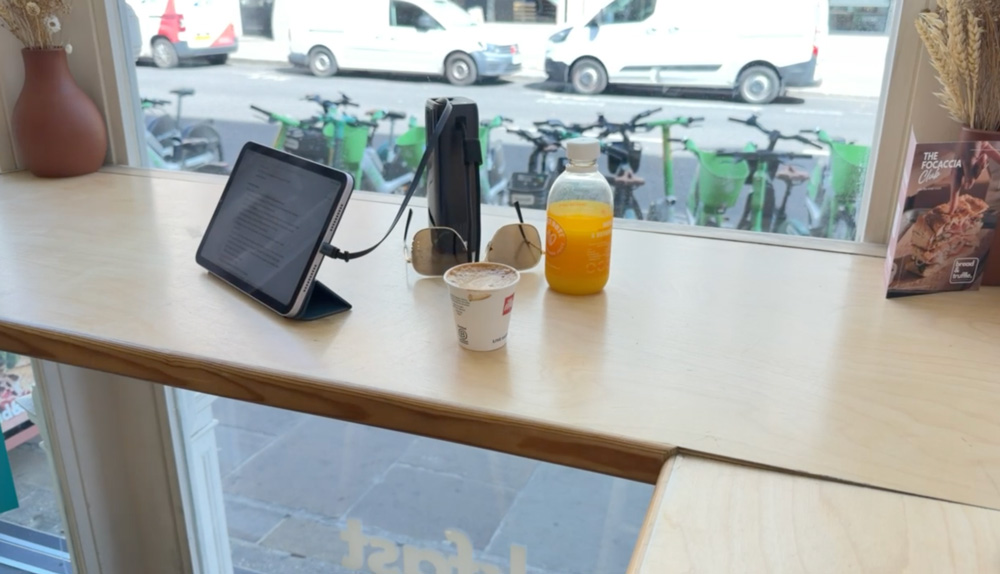
If we get these improvements, in particular a high-refresh-rate OLED display, I think that will be the new lease of life that the iPad mini will need to boost its sales and probably make it the most popular iPad ever.
Even with the inevitable price increases, the next-gen iPad mini looks pretty good value for money, and I, for one, will be in line to pick mine up.
I reckon not only is the iPad mini safe, but it’s about to have a rebirth. Is it the perfect iPad? Maybe not right now…but watch this space!

3 responses
The focus on a stronger chip and AI-driven features makes a lot of sense, especially with future iPadOS demands growing fast.
I think the point about the iPad mini being “an honest iPad” really lands. It has always felt like the model that doesn’t need to justify itself with laptop-style ambitions, but still becomes surprisingly useful because of its size. The idea of iPadOS making more of that 8.3-inch display usable is interesting too, because the mini’s limitation was never really power so much as space. If Apple does move it to OLED and maybe slightly larger at 8.7 inches, I wonder whether that changes its character at all or simply makes the current concept better.
As long as they don’t try to make it into an iPad mini Pro, I’ll be happy!